
Embarking on the journey to study, work, or live abroad often involves a critical milestone: the IELTS exam. Achieving a high score on this test can unlock a world of opportunities, but it requires more than just a good command of the English language. It demands strategic, focused, and effective IELTS preparation. At Bolsa25, we believe in empowering learners with practical, real-world skills. Our conversation-focused approach and small group settings are designed to build the confidence you need. This comprehensive guide distills our expertise and extensive research into actionable strategies to help you navigate every section of the IELTS test and achieve the score you deserve.
Why is IELTS preparation essential for success?
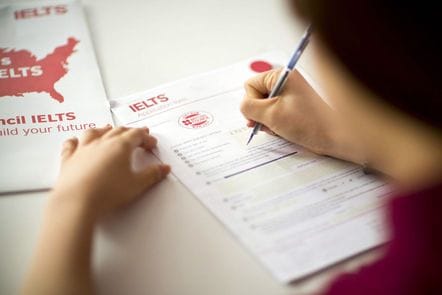
Many test-takers mistakenly believe that general English proficiency is enough to ace the IELTS. However, the IELTS is not just a test of your language skills; it’s a test of your ability to apply those skills under strict, timed conditions and according to a specific format. Even native English speakers can find the test challenging without proper preparation.
Effective IELTS preparation is essential because it:
Familiarizes You with the Test Format:
Understanding the structure, question types, and time constraints for each of the four sections (Listening, Reading, Writing, and Speaking) is crucial. This familiarity reduces anxiety and helps you manage your time effectively on test day.
Develops Specific Skills:
The test requires specific strategies, such as skimming and scanning in the Reading section, structuring an academic essay in Writing Task 2, or developing a topic coherently in the Speaking test. These are not skills typically used in everyday English communication.
Identifies Strengths and Weaknesses:
A structured preparation plan, starting with a mock test, helps you identify which areas you excel in and which require more attention. This allows you to allocate your study time more efficiently.
Builds Confidence:
The more you practice and understand the test, the more confident you will feel. Confidence is a key performance factor, helping you stay calm and focused under pressure.
Ultimately, investing time in a thorough IELTS preparation plan is the most reliable path to achieving your target band score and turning your international ambitions into reality.
Understanding the IELTS Exam
Before diving into preparation strategies, it’s vital to have a clear understanding of the test itself. The International English Language Testing System (IELTS) is the world’s most popular English language proficiency test for higher education and global migration.
Structure of the IELTS test
IELTS comes in two main versions, and the one you take depends on your goals:
- IELTS Academic: This is for individuals applying for higher education or professional registration in an English-speaking environment. It features topics and tasks suitable for undergraduate or postgraduate students.
- IELTS General Training: This is for those going to English-speaking countries for secondary education, work experience, or training programs. It is also a requirement for migration to Australia, Canada, New Zealand, and the UK. The tasks and texts focus on everyday situations.
Both test versions consist of four sections, or modules. As noted by the official Cambridge English site, all test-takers complete the same Listening and Speaking tests, but the Reading and Writing tests differ between Academic and General Training.
Four sections explained: Listening, Reading, Writing, Speaking
The total test time is 2 hours and 45 minutes. The Listening, Reading, and Writing sections are completed in one sitting, while the Speaking test may be on the same day or up to a week before or after the other sections.
| Section | Duration | Format |
| Listening | 30 minutes (+10 mins transfer time for paper-based test) | Four recorded monologues and conversations with 40 questions. The recordings are played only once. |
| Reading | 60 minutes | Three long passages with 40 questions. Texts for Academic are taken from books, journals, and newspapers. Texts for General Training are from notices, advertisements, and books. |
| Writing | 60 minutes | Two tasks. Task 1: (Academic) Describe a graph, chart, or diagram (150+ words). (General) Write a letter (150+ words). Task 2: Write a formal essay in response to a point of view or problem (250+ words). |
| Speaking | 11-14 minutes | A face-to-face interview with an examiner, consisting of three parts: an introduction, a long turn on a familiar topic, and a two-way discussion. |
IELTS Listening Preparation
The Listening test is designed to assess your ability to understand main ideas, detailed factual information, the opinions and attitudes of speakers, and the purpose of an utterance. A solid IELTS preparation strategy for this section is non-negotiable, as the recording is played only once.
Types of listening tasks
The Listening test is divided into four sections, each with 10 questions. The difficulty increases with each section. the sections are structured as follows:
- Section 1: A conversation between two people in an everyday social context (e.g., booking a hotel).
- Section 2: A monologue in an everyday social context (e.g., a speech about local facilities).
- Section 3: A conversation between up to four people in an educational or training context (e.g., students discussing an assignment).
- Section 4: A monologue on an academic subject (e.g., a university lecture).
You will encounter various question types, including multiple choice, matching, plan/map/diagram labeling, form/note/summary completion, and short-answer questions.
Strategies for note-taking and focus
Since you only hear the audio once, effective real-time strategies are crucial.
- Use the Preparation Time Wisely: Before each section, you have a short time to read the questions. Use this to underline keywords and predict the type of information you need to listen for (e.g., a name, a number, a date).
- Multitask Effectively: You need to read the questions, listen for the answers, and write them down simultaneously. Practice this skill with mock tests until it becomes second nature.
- Listen for Signposts: Speakers often use “signposting language” (e.g., “First…”, “Next…”, “Finally…”, “However…”) to structure their talk. These words can signal that a new point or an answer is coming.
- Don’t Lose Your Place: If you miss an answer, don’t panic. Leave it blank and immediately move your focus to the next question. You can try to guess the missed answer during the transfer time. Staying with the flow of the recording is more important than getting stuck on one question.
Common listening mistakes and how to avoid them
As detailed by the experts, several common pitfalls can cost you valuable marks.
- Spelling and Grammar Errors: An answer with incorrect spelling is marked as wrong. While listening, focus on getting the word down. Use the 10-minute transfer time (on the paper-based test) to double-check your spelling.
- Ignoring Word Limits: If the instruction says “NO MORE THAN TWO WORDS AND/OR A NUMBER,” an answer with three words will be incorrect, even if the information is right. Pay close attention to these instructions.
- Missing Plural ‘s’: A common mistake is writing a singular noun when the plural was spoken (e.g., writing “book” instead of “books”). Listen carefully for the ‘s’ sound at the end of words.
- Getting Tricked by “Distractors”: Sometimes a speaker will give a piece of information and then correct it (e.g., “The meeting is at 7 PM… oh, wait, no, I have another appointment then. Let’s make it 7:30 PM.”). The correct answer is 7:30 PM. Always listen until the speaker has finished making their point.
IELTS Reading Preparation
The Reading test assesses a wide range of reading skills, including reading for gist, main ideas, detail, and understanding logical argument. Your approach must be strategic to complete 40 questions based on three long texts in just 60 minutes.
Key differences between Academic and General reading tasks
While both tests are 60 minutes long and have 40 questions, the content differs significantly. This is a key consideration for your IELTS preparation.
- Academic Reading: Features three long, complex texts from authentic sources like books, journals, magazines, and newspapers. The texts are academic in nature and written for a non-specialist audience. They often involve descriptive, factual, discursive, and analytical content.
- General Training Reading: The texts are more related to everyday life. Section 1 contains two or three short factual texts (e.g., advertisements, notices). Section 2 has two short, work-related factual texts (e.g., job descriptions, company policies). Section 3 contains one longer, more complex text on a topic of general interest. According to the official IELTS site, it is generally necessary to answer more questions correctly on a General Training test to secure a given band score compared to the Academic test, due to the differing text complexity.
Skimming and scanning techniques
These two skills are the cornerstone of effective IELTS reading. You do not have time to read every word of every passage.
- Skimming: This means reading quickly to get a general overview of the passage. You should skim the title, subheadings, and the first sentence of each paragraph to understand the main topic and structure. This should take no more than 2-3 minutes per passage.
- Scanning: After reading a question, you scan the passage for specific keywords or ideas (like names, dates, or numbers) to locate the part of the text that contains the answer. Your eyes move quickly over the text without reading for meaning. Once you find the keyword, you read the surrounding sentences carefully to find the answer.
Improving reading speed and comprehension
- Practice Timed Tests: The best way to improve speed is to practice under exam conditions. Use a timer and force yourself to stick to the 20-minute limit for each passage.
- Build Vocabulary: A wider vocabulary allows you to read and understand faster. When you encounter new words during practice, look them up and record them in a vocabulary notebook with their synonyms and example sentences.
- Read Widely: Get into the habit of reading English articles, journals, and newspapers on a variety of topics. This will not only improve your vocabulary but also your reading stamina and familiarity with different writing styles.
- Focus on Question Types: Familiarize yourself with all 14 types of reading questions (e.g., True/False/Not Given, Matching Headings, Summary Completion). Each type requires a slightly different strategy.
IELTS Writing Preparation
The Writing test is often considered one of the most challenging sections. It assesses your ability to write a response that is appropriate in terms of content, organization, vocabulary, and grammar. A dedicated IELTS preparation course can be particularly beneficial for this skill.
Structure of Task 1 and Task 2 (Academic and General)
The writing test lasts 60 minutes and is divided into two tasks with different weightings—Task 2 is worth twice as many marks as Task 1.
Task 1 (20 minutes, 150+ words):
- Academic: You are presented with a graph, table, chart, or diagram. You must describe, summarize, or explain the information in your own words. This might involve describing and comparing data, identifying trends, or describing a process.
- General Training: You are presented with a situation and must write a letter requesting information or explaining the situation. The letter can be personal, semi-formal, or formal in tone.
Task 2 (40 minutes, 250+ words):
- For both Academic and General Training, you must write a formal essay in response to a point of view, argument, or problem. You might be asked to discuss two opposing views, state your opinion, or discuss the advantages and disadvantages of a topic.
Common writing patterns and vocabulary
Using appropriate language and structure is key to a high IELTS Score.
- Task 1 (Academic): Use specific vocabulary to describe trends (e.g., increase, rocket, plummet, fluctuate), make comparisons (e.g., similarly, in contrast, whereas), and introduce the report (e.g., The graph illustrates/shows…).
- Task 1 (General): Use correct letter-writing conventions, including appropriate greetings (Dear Sir/Madam, Dear Mr. Smith) and closings (Yours faithfully, Yours sincerely). The tone must match the situation.
- Task 2 (Essay): Structure your essay logically with an introduction (paraphrasing the question and stating your thesis), 2-3 body paragraphs (each with a clear main idea, explanation, and example), and a conclusion (summarizing your main points). Use cohesive devices (Furthermore, In addition, However, In conclusion) to link ideas smoothly.
Time management for writing tasks
Effective time management is critical. As recommended, you should aim to spend about 20 minutes on Task 1 and 40 minutes on Task 2. A good approach is:
- Plan (2-3 mins for T1, 5 mins for T2): Brainstorm ideas and create a quick outline for each task. This saves time in the long run and leads to a more organized response.
- Write (15 mins for T1, 30 mins for T2): Focus on writing your response based on your plan.
- Review (2-3 mins for T1, 5 mins for T2): Leave a few minutes at the end to proofread your work for any grammatical errors, spelling mistakes, or typos.
Tips for avoiding grammatical mistakes
- Master Sentence Structures: Practice writing a mix of simple, compound, and complex sentences. Over-relying on simple sentences will limit your score for Grammatical Range and Accuracy.
- Check Subject-Verb Agreement: Ensure your subjects and verbs agree (e.g., “The data shows,” not “The data show”).
- Use Articles Correctly: Pay attention to the use of ‘a,’ ‘an,’ and ‘the.’ This is a common area of error for many learners.
- Punctuation: Use commas, periods, and other punctuation marks correctly to ensure your writing is clear and easy to read.
IELTS Speaking Preparation
The Speaking test is a face-to-face conversation with a certified examiner. It is designed to be as close to a real-life conversation as possible. The goal is to assess your fluency, vocabulary, grammar, and pronunciation.
Common speaking topics and question types
IELTS Test is divided into three parts, each with a different focus:
- Part 1 (4-5 minutes): Introduction and Interview. The examiner will ask you general questions about yourself and familiar topics like your home, family, work, studies, and interests.
- Part 2 (3-4 minutes): The Long Turn. You will be given a cue card with a topic and some points to cover. You have one minute to prepare and then must speak on the topic for 1-2 minutes.
- Part 3 (4-5 minutes): Discussion. The examiner will ask you more abstract and in-depth questions related to the topic from Part 2. This part explores your ability to express and justify opinions and to analyze and speculate on issues.
Strategies for fluency and coherence
- Extend Your Answers: Avoid giving short, one-word answers. For Part 1, aim to answer in 2-3 sentences. Explain your answer with a reason or an example.
- Use Fillers Naturally: It’s natural to pause to think. Instead of staying silent, use phrases like “Well, that’s an interesting question,” or “Let me see…” to give yourself a moment.
- Don’t Memorize Answers: Examiners are trained to spot memorized responses. It sounds unnatural and won’t allow you to answer the specific question asked. Focus on learning topic-specific vocabulary instead.
- Structure Your Part 2 Talk: Use your one-minute preparation time to jot down keywords for an introduction, main points, and a conclusion. This will help you speak coherently for the full two minutes.
Overcoming nervousness in speaking tests
- Practice, Practice, Practice: The more you practice speaking English, especially in a test-like format, the more confident you will become. Practice with a friend, a tutor, or even by recording yourself.
- Remember the Examiner is on Your Side: The examiner’s job is to help you perform at your best. They are not trying to trick you. Try to view it as a conversation rather than an interrogation.
- Breathe: Before you enter the room, take a few deep breaths to calm your nerves. A calm mind thinks more clearly.
- Smile and Be Friendly: A positive attitude can make a big difference. It helps you relax and creates a better rapport with the examiner.
Pronunciation and intonation improvement
Pronunciation is not about having a native accent; it’s about being clear and understandable. To improve:
- Listen and Imitate: Listen to native speakers through podcasts, movies, or news broadcasts. Pay attention to intonation (the rise and fall of the voice), stress on words and sentences, and the rhythm of the language.
- Record Yourself: As suggested by the British Council, record yourself speaking and compare it to a native speaker. This helps you identify areas for improvement.
- Focus on Problem Sounds: Identify specific sounds that are difficult for you (e.g., ‘th,’ ‘r,’ ‘v’) and practice them individually.
Resources for IELTS Preparation
A wealth of resources is available to support your IELTS preparation. Choosing high-quality IELTS preparation materials is crucial for success.
Recommended books and study guides
- The Official Cambridge Guide to IELTS: This guide covers all four sections and includes tips, strategies, and eight full practice tests. It’s suitable for both Academic and General Training candidates.
- Cambridge IELTS Practice Tests Series (e.g., IELTS 19): These books contain authentic past papers from Cambridge Assessment English. They are essential for getting a feel for the real test.
- Barron’s IELTS Superpack: A comprehensive collection of books and audio material that provides extensive practice and strategies for all sections of the test.
Online courses and apps
For those who prefer a structured digital learning experience, an IELTS preparation full course online can be highly effective. Many platforms offer video lessons, interactive exercises, and personalized feedback.
- Magoosh IELTS: Often rated as one of the best overall self-paced courses, Magoosh offers video lessons, a large bank of practice questions, and expert support.
- IELTS Liz: A free and highly popular resource run by an experienced IELTS teacher, offering countless lessons, tips, and model answers.
- E2 Language: Provides a range of packages, including live classes, one-on-one tutorials, and mock tests with detailed feedback.
- Official IELTS Apps: The British Council and IDP offer several free apps for practice on the go, such as the ‘IELTS Prep App’.
Official IELTS practice materials
The creators of the test provide the most reliable practice materials. Always prioritize these in your study plan.
- IELTS.org: The official website offers free sample test questions and access to the free ‘IELTS Ready’ preparation platform.
- British Council TakeIELTS: Provides a wealth of free resources, including practice tests, webinars, and expert advice.
- IDP IELTS: Offers free practice materials, masterclasses, and helpful articles to guide your preparation.
How to analyze your performance?
Simply doing practice tests is not enough; you must analyze your results to make progress. This is a critical step in any serious IELTS preparation plan.
- Identify Error Patterns: After each practice test, don’t just count your score. Go through every incorrect answer and understand why you got it wrong. Was it a vocabulary issue? Did you misunderstand the question? Did you run out of time?
- Keep an Error Log: Create a notebook or a digital document to log your mistakes. For each error, write down the question, your wrong answer, the correct answer, and the reason for the mistake. Review this log regularly.
- Get Expert Feedback: For Writing and Speaking, self-analysis is difficult. This is where an IELTS preparation course or a tutor is invaluable. An expert can assess your performance against the official band descriptors and give you targeted feedback on how to improve your Task Achievement, Coherence, Lexical Resource, and Grammar/Pronunciation.
- Track Your Progress: Periodically retake a mock test under exam conditions to see if your scores are improving. This will help you stay motivated and adjust your study plan as needed.
Tips for Effective IELTS Preparation
A smart study plan is the key to success. It’s not just about how much you study, but how you study.
- Create a Realistic Study Plan: Assess how much time you have before your test and create a weekly schedule. Allocate specific time slots for each of the four skills. Be consistent.
- Set SMART Goals: Instead of a vague goal like “get better at writing,” set a Specific, Measurable, Achievable, Relevant, and Time-bound goal, such as “Improve my Writing Task 2 score from 6.0 to 6.5 in four weeks by practicing three essays per week and getting feedback.”
- Focus on Skills, Not Just Tests: While mock tests are important, dedicate time to improving your underlying English skills. Read articles, listen to podcasts, write a daily journal, and speak English whenever you can.
- Embrace the Learning Cycle: Effective learning follows a cycle: expose yourself to new language, practice using it, get feedback, and review. This active process ensures that you retain what you learn.
Mistakes to Avoid During IELTS Preparation
Knowing what not to do is as important as knowing what to do.
- Focusing Only on Strengths: It’s tempting to practice what you’re good at, but your overall score is an average. You must work on your weaknesses to improve your band score.
- Memorizing Answers: This is particularly ineffective for the Writing and Speaking tests. Examiners can easily spot pre-prepared answers, which results in a low score.
- Ignoring the Marking Criteria: You must understand how you are scored. Download the public band descriptors for Writing and Speaking from the official IELTS website and use them to guide your practice.
- Cramming at the Last Minute: Language skills are built over time. Consistent study over several weeks or months is far more effective than trying to cram everything in the final days.
- Using Unreliable Materials: Stick to official or well-regarded preparation materials. Using poorly designed tests can give you a false sense of your ability and teach you incorrect strategies.
In Conclusion
Success in the IELTS exam is a direct result of dedicated and strategic IELTS preparation. It requires a deep understanding of the test format, consistent practice with high-quality materials, and a smart approach to analyzing and learning from your mistakes. By breaking down each section and applying the targeted strategies outlined in this guide, you can build the skills and confidence needed to walk into the test center fully prepared.
At bolsa25, we are committed to helping you on this journey. Our unique approach, focusing on small group learning and real-world conversation, provides the supportive environment you need to excel. Remember, your IELTS score is more than just a number—it’s your passport to a new chapter in your life. Start your preparation today, and take a confident step towards your future.
FAQs
Effective IELTS preparation at home is entirely possible with the right plan and resources. Start by taking a mock test to assess your current level. Then, create a structured study schedule, dedicating time to each of the four skills daily. Utilize high-quality online resources like the official IELTS website, British Council, IDP, and reputable sites like IELTS Liz. Use official Cambridge practice test books for a realistic test simulation. For speaking, practice with a language exchange partner online or record yourself. For writing, study model answers and get feedback from online tutors or courses if possible. Consistency is the key to successful home preparation.
Getting a Band 7 is a challenging but achievable goal for many test-takers. A Band 7 is described as a Good User who has an operational command of the language, though with occasional inaccuracies, inappropriacies, and misunderstandings in some situations. It signifies a high level of English proficiency. The difficulty depends on your starting level. Moving from a Band 6 to a Band 7, for example, requires significant effort, particularly in the Writing and Speaking sections, where subtle improvements in vocabulary, grammar, and coherence are needed. It is not easy and requires dedicated preparation.
An IELTS overall band score of 7.0 is generally considered to be at the C1 level of the Common European Framework of Reference for Languages. According to research by Cambridge English, a score of 6.5 is on the borderline between B2 and C1, while a 7.0 firmly places a candidate within the C1 Effective Operational Proficiency level. A C1 user can understand a wide range of demanding, longer texts, express ideas fluently and spontaneously, and use language flexibly for social, academic, and professional purposes.
Achieving a Band 9, or Expert User level, is extremely rare and signifies a proficiency equivalent to that of an educated native speaker. It means you have a fully operational command of the language: appropriate, accurate, and fluent with complete understanding. To get a 9.0, you must make virtually no errors in any of the four sections. This requires not only flawless grammar and an extensive, sophisticated vocabulary but also a perfect understanding of the test’s nuances. For most non-native speakers, and even for many native speakers, a Band 9 is an exceptionally difficult target. The focus for most candidates should be on achieving their required score e.g., 7.0 or 8.0, through strategic and diligent preparation.How do I prepare for IELTS at home?
Is getting 7 in IELTS easy?
Is IELTS 7.0 B2 or C1?
How to get 9.0 in IELTS?